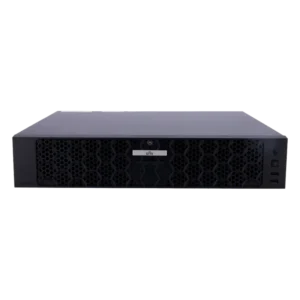



UNIVIEW 128-CH NVR, 16 SATA Interface, 3U, H.265 and 4K
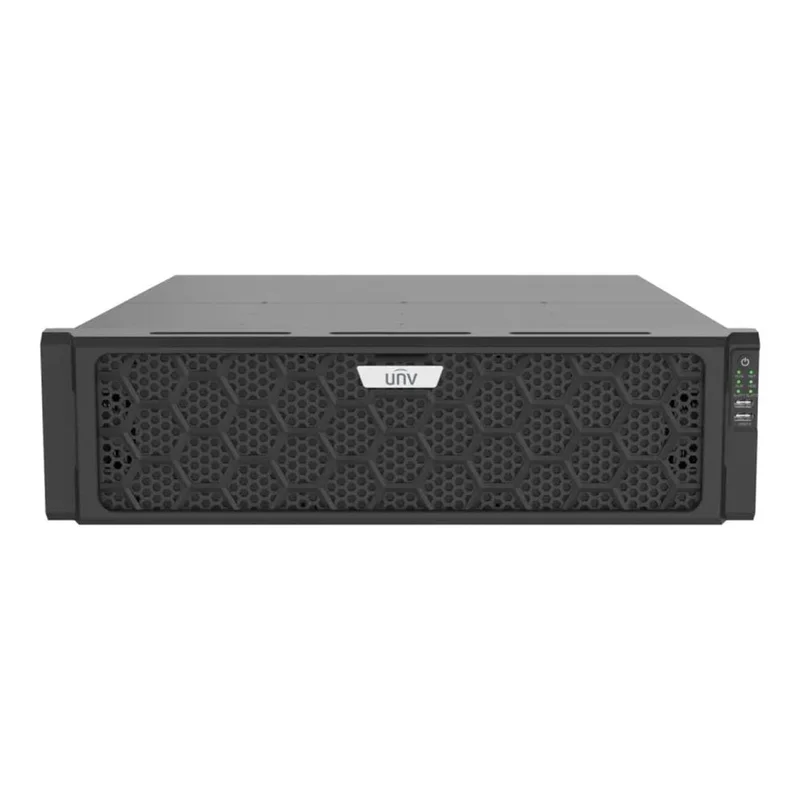
The UNIVIEW 128-CH NVR is a network video recorder for professional CCTV systems that use IP cameras. A network video recorder, or NVR, receives the video streams from network cameras over the local network, records them to hard drives and makes them available for live viewing and playback. This model is designed for systems with a large number of channels, where one central recorder replaces many smaller units.
Key features
- 128 channels for connecting up to 128 IP camera streams to one recorder
- 16 SATA interfaces for hard drives, allowing storage to be expanded as needed
- 3U rack-mount chassis for installation in standard server racks
- H.265 video compression for efficient use of storage space
- 4K support for high-resolution camera images
The product description from the supplier gives these features as the main specifications. Storage capacity depends on the hard drives fitted, the number of cameras, the resolution and frame rate, and the recording time required.
Video recording and compression
H.265 is a modern video compression standard. Compared with older formats, it can store the same video quality in a smaller file size, which lowers the storage needed for long recording periods. This is especially useful when many cameras run continuously, because storage is usually one of the largest costs in a recording system.
4K support means the recorder can handle high-resolution camera feeds. Higher resolution gives more detail, which is valuable where faces, number plates, serial numbers or small objects need to be identified in a recording. Operators can also zoom into a recording without losing as much detail as with lower-resolution footage.
Storage and hard drives
The 16 SATA interfaces allow several hard drives to be installed in the unit. Drives are normally chosen for continuous recording and matched to the number of cameras and the retention period. Where a site needs a different retention period, the storage can be planned by adjusting the drive capacity or the recording settings. Installers should confirm the drive specification with their system design.
Installation and rack fitting
The 3U chassis takes up three rack units in a standard 19-inch rack. This is a common format for server rooms, comms cabinets and equipment racks. Placing the recorder in a rack keeps it secure, makes cabling easier to manage and allows it to sit with other network devices such as switches, routers and power supplies. Good airflow around the unit helps keep it running reliably.
Typical uses
- Central recording for large IP camera networks
- Upgrading or expanding an existing UNIVIEW camera system
- Monitoring large sites such as office buildings, warehouses, car parks, schools and campuses
- Creating a single recording point for security and operations teams
System integrators can use the 128-channel capacity to plan camera layout, storage and network bandwidth for the whole site in one design. Because the recorder brings all video into one place, operators can review events across multiple cameras from a single system.
Planning a system
Before installation, it is worth checking the network bandwidth, the number and resolution of cameras, the storage needed for the required retention period and the power and cooling available in the rack. Compatible UNIVIEW cameras and network switches should be selected to suit the design. A well planned system makes it easier to maintain, expand and use over time.