


Uniview THERMAL UNIVIEW 4M DUAL Thermal Bullet Camera
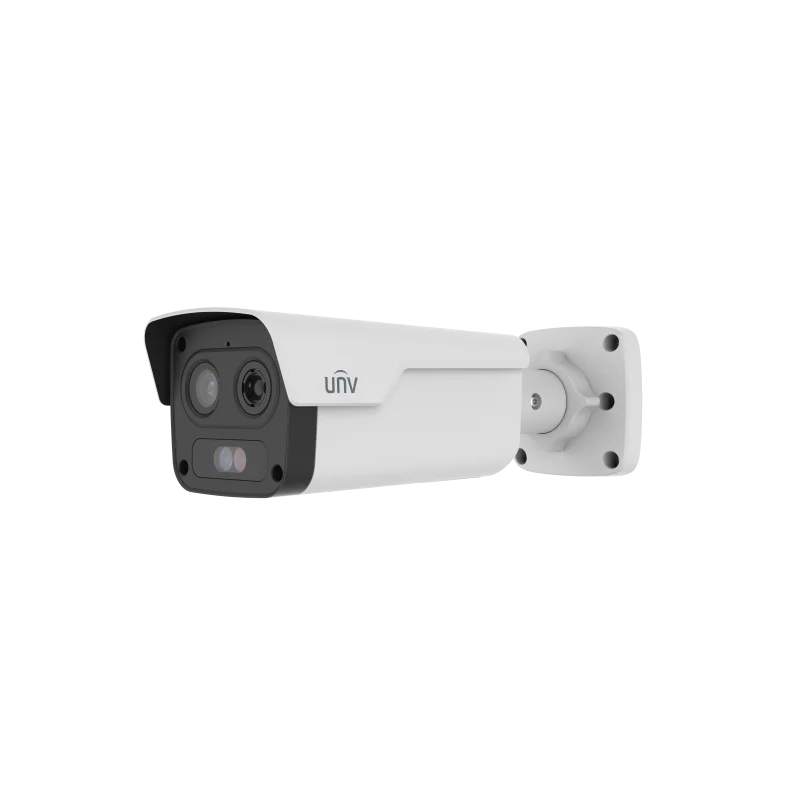
The Uniview THERMAL UNIVIEW 4M DUAL is a dual spectrum bullet camera designed for outdoor and perimeter surveillance. It brings together a thermal imaging channel and a 4MP optical channel in a single unit, so one camera can monitor a site in both visible light and heat. It is part of Uniview’s thermal camera range within the wider CCTV product line.
Key features
- Dual spectrum design with a thermal channel and an optical channel in one housing
- 10mm thermal lens for heat-based imaging
- 8mm normal lens for visible-light imaging
- 4MP optical resolution for clear, detailed standard video
- Bullet form factor for fixed outdoor mounting
How the dual spectrum works
The thermal channel detects infrared energy emitted by objects and converts it into an image. Warm bodies such as people and vehicles stand out against cooler backgrounds, which helps operators spot activity in total darkness, fog, glare or dense foliage. The optical channel records ordinary visible light and provides the detail needed to identify what is being seen. Using both channels together gives a more complete picture than either one alone.
Typical uses
- Perimeter security for fences, gates and boundary lines
- Monitoring car parks, loading bays and yards after dark
- Early detection of intruders on open land or at remote sites
- Observation of critical infrastructure such as substations and pumping stations
- Wildlife and livestock monitoring in appropriate settings
Planning the installation
Because the thermal lens and the optical lens have different focal lengths, they cover different fields of view. Plan the mounting height and angle so that the area of interest falls within both views where possible. Check the mounting surface and provide suitable brackets or poles for a stable, weather-protected installation. Connect the camera to a compatible recorder or network video system according to the manufacturer’s documentation.
Who it is for
The camera suits integrators, security installers and facility managers who need dependable outdoor coverage without relying on lighting. It is most useful where a conventional camera would struggle, and where operators need to see both the scene and any heat sources within it.