


Crimping Ratchet Tool RG59 BNC
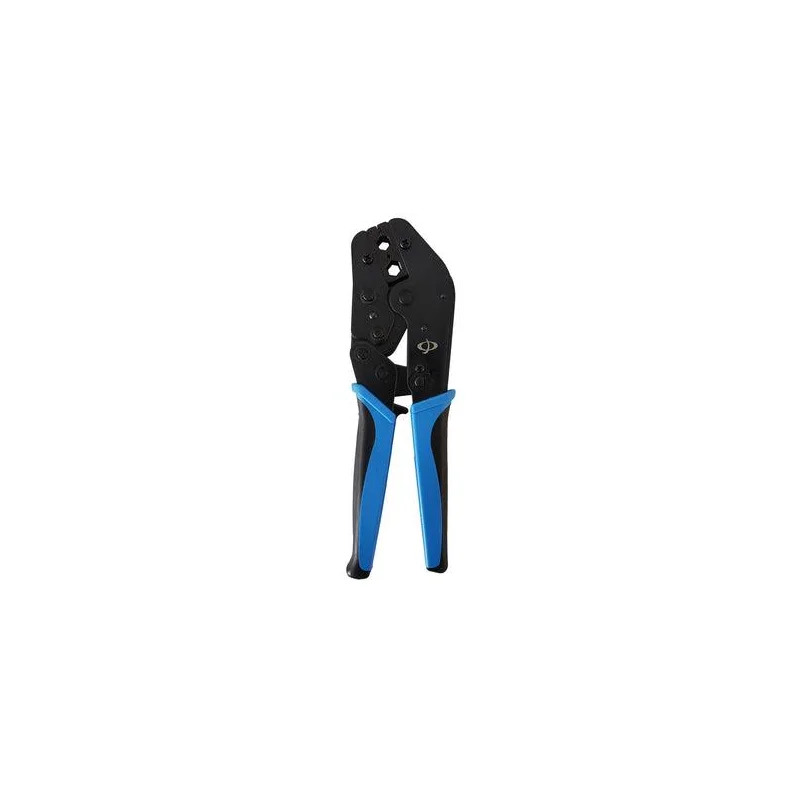
The Crimping Ratchet Tool RG59 BNC is a hand-operated crimping tool made for terminating RG59 coaxial cable with BNC connectors. It is listed under Tools and Hardware, in the Accessories subcategory, and is intended for people who install or repair coaxial cabling as part of a wider project.
Coaxial cable carries a signal along a central conductor surrounded by insulation and a shield. When a BNC connector is fitted, the outer sleeve has to be crimped firmly onto the cable so that the shield and the connector make solid contact. A poor crimp can lead to weak signal, intermittent faults or noise, so the quality of each termination matters. A dedicated crimping tool helps achieve a consistent result on every connector.
What the tool does
The tool compresses the connector sleeve around the prepared cable end. Its ratchet mechanism is designed to hold the crimp through a complete movement, which helps reduce the chance of an incomplete or uneven crimp. The result is a more repeatable connection than one made with improvised tools.
Key features
- Designed for RG59 coaxial cable
- Intended for BNC connector termination
- Ratchet action for a controlled, complete crimp
- Hand-operated, no power source needed
- Listed in the Tools and Hardware range, Accessories subcategory
Typical uses
Installers often use this type of tool when fitting cameras and monitors in CCTV systems, where RG59 cable carries video signals to recorders or displays. It can also be useful for antenna feeds, test leads and other coaxial runs that finish with BNC connectors. Electricians, security engineers and technically minded home users may all find it useful when they need to make or repair a cable end on site.
Using the tool with good practice
For the best results, strip the cable to the length specified by the connector maker, check that the braid and centre conductor are neatly prepared, and fit the connector before crimping. Compare each finished termination with a known good example. Keep the tool clean and store it in a dry place so the jaws and mechanism stay in good working order.
Who it is for
This tool is aimed at trade installers, maintenance staff and experienced DIY users who work with RG59 and BNC systems. It is a focused accessory: it does one job, and it does that job within a general installation toolkit that may also include strippers, cable testers and a range of connectors.
Before you buy, confirm that your connectors and cable type match the tool’s intended use. If you are working with a different coaxial size or connector style, check compatibility first.